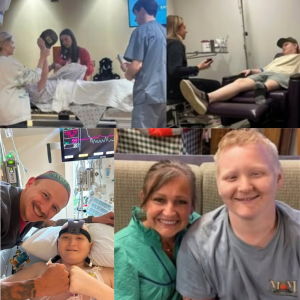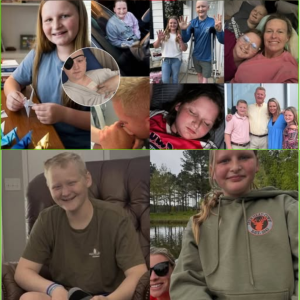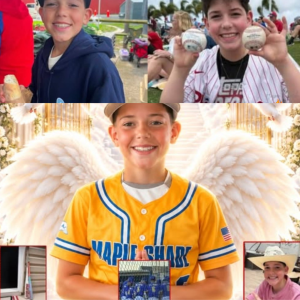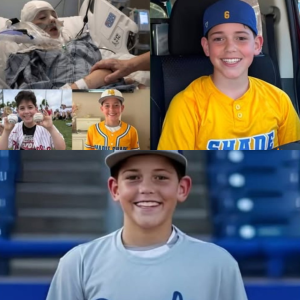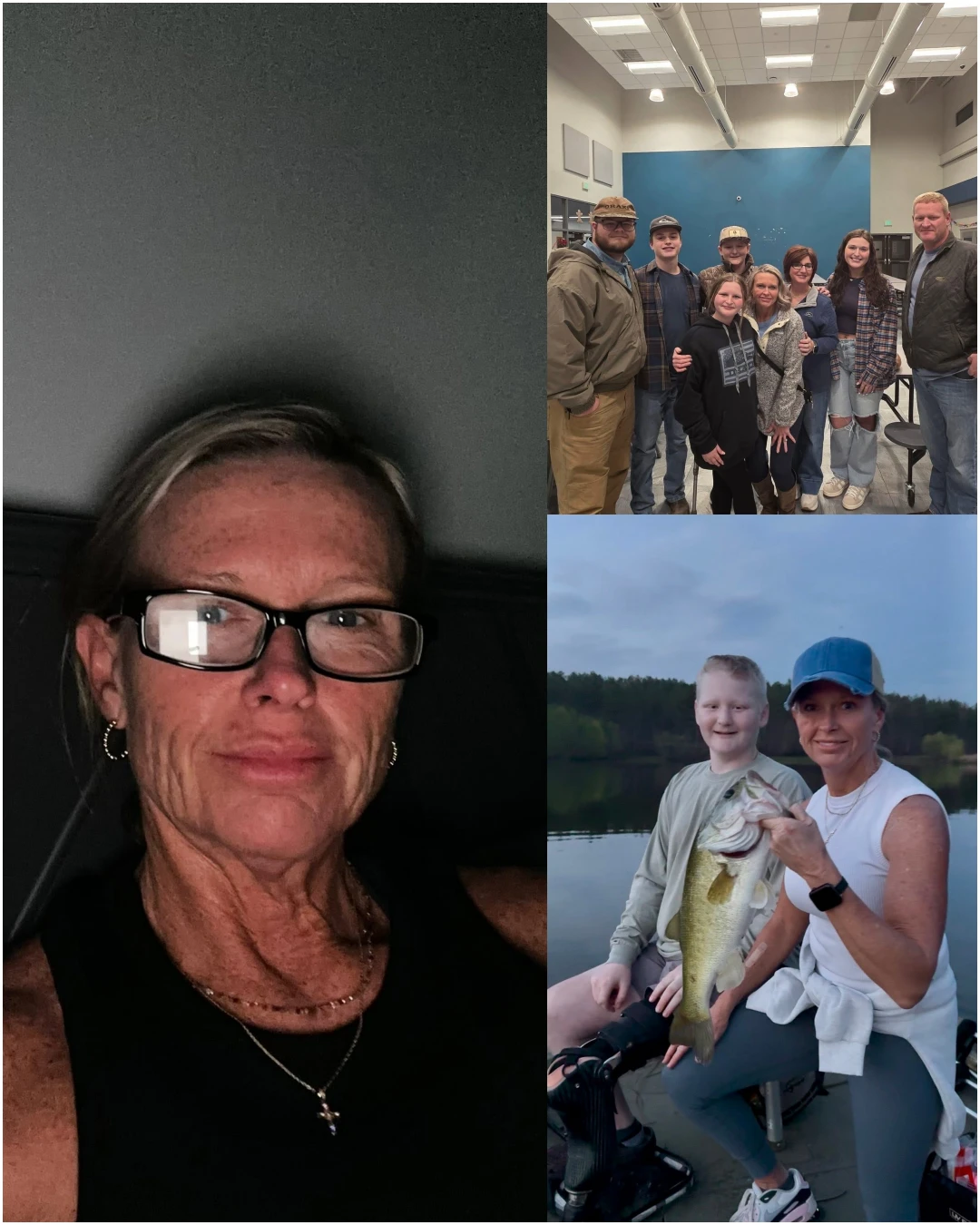
One month after Will’s death, Brittney Battles Roberts finally spoke about a part of their journey she had deliberately kept private. It was not another hospital memory, a heartbreaking final conversation, or a detail about Will’s cancer battle. Instead, it was something happening quietly behind nearly every photo, video, comment, and share: money.
For years, Brittney had openly documented her family’s life on Facebook, long before cancer transformed their world. When Will became sick, those ordinary family posts became something much bigger as thousands, and eventually hundreds of thousands, of strangers began following his journey. People prayed for Will, encouraged the family, and shared his story far beyond their own community.
Brittney says she never set out to become a content creator. She was simply a terrified mother trying to tell the truth about what her child and family were experiencing, including the beautiful moments, the frightening ones, and the realities behind hospital doors that outsiders rarely see. Somewhere along the way, however, she began learning something she had never expected about how social media actually works.
She deliberately avoided talking about the financial side while Will was alive.

At the time, Brittney did not want money, followers, or Facebook monetization to overshadow the only thing that mattered to her: her son was fighting for his life. The family received enormous support, and she remained deeply grateful for the people who followed Will and helped them. But after his death, a single Facebook post caused her to look back at several strange moments from their journey very differently.
The post was about Charlie and what she had endured while her brother battled cancer.
According to Brittney, that one post reached approximately 1.7 million views. It generated about $398.69 in income on her page. The amount itself was not what shocked her most; it was what the number suddenly explained.
Nearly $400 from one post meant that attention itself had financial value.
A view mattered. A comment mattered. A share mattered. Even returning later to check for an update could contribute to the engagement surrounding a story, particularly on a monetized page.
And suddenly, Brittney says, questions that had confused her during Will’s illness began to make sense.
Why had strangers repeatedly asked her to send them Will’s photographs and videos instead of simply sharing the original Facebook post? Why had pages copied his picture, rewritten his story, and sometimes included details Brittney says were not even true? Why did Will’s face keep appearing on pages operated by people the Roberts family had never met?
At the time, Brittney could not understand it.
People would send her those posts and ask why someone would invent details about a seriously ill child. She had no satisfying answer then. After seeing exactly what 1.7 million views could generate on her own page, however, she reached an uncomfortable conclusion.
“Tragedy makes money.”
The phrase is harsh, and Brittney herself acknowledged how ugly it sounds. But her explanation is painfully simple: a sick child makes people stop scrolling. A heartbreaking story encourages people to read, comment, tag friends, share the post, and come back for updates.
On social media, every one of those actions can have value.
That realization also changed the way Brittney views familiar phrases such as, “Leave a comment below for the family to read.” Sometimes, she believes, that request may be completely sincere. But when a child’s story has been copied onto someone else’s monetized page, the family at the center of the tragedy may never even see those messages.
The comments can instead benefit the page reposting the story.
That distinction became especially painful when Brittney reflected on how widely Will’s photographs, videos, and story had circulated. She says large pages repeatedly shared material about her son, sometimes reaching enormous audiences. Yet according to Brittney, not once did anyone contact the family to say that Will’s story had generated revenue and offer to give some of that money back.
Her point was not that the Roberts family was asking for payment.
She emphasized that her family had been incredibly blessed and supported throughout Will’s fight. What troubled her was thinking about the next family, perhaps one that does not have the same financial support. Somewhere, she wrote, another mother could be sitting beside a child’s hospital bed while worrying about a mortgage, electricity bill, groceries, or weeks of missed work.
Meanwhile, a stranger’s post about that same child could be going viral.
That is why Brittney’s message is not simply an accusation against social media. It is also advice to families going through similar battles: tell your own story. If strangers believe a child’s journey is powerful enough to copy and distribute to hundreds of thousands of people, Brittney argues, then the family should not be afraid to build its own community around that story.
If the page eventually becomes monetized, she sees nothing shameful about allowing it to support the family.
Parents caring for critically ill children often miss work while bills continue arriving as if nothing has changed. They may spend nights awake beside hospital beds, living a reality they never chose. If telling that reality honestly can help keep their own family financially afloat, Brittney believes they should not allow outsiders to be the only people benefiting from it.
She demonstrated that philosophy with another child named Lulu.
After sharing Lulu’s battle with the same devastating cancer that took Will, Brittney says the post generated income. Instead of keeping that money, she redirected it to Lulu’s family. For Brittney, it showed what social media monetization could look like when the people at the center of the story are not forgotten.
Her message to followers is equally simple.

If you cannot donate money to a struggling family, your support may still have financial value. Find the actual family page, watch their original videos, share their original posts, and leave encouragement somewhere the parents themselves can read it. Where people choose to click may matter more than they realize.
And perhaps that explains one of the questions Brittney has continued to hear since Will died: Why is his story still everywhere?
Her answer is painful but difficult to dismiss. Will is remembered because people loved him, prayed for him, and continue to care about his family. But his name, his face, and his story can also generate attention, and attention on social media can generate income.
One month after losing her son, Brittney finally said aloud what she could not bring herself to discuss while he was fighting.
The most unsettling part of the story may not be that tragedy can go viral. We already knew that. It is realizing that somewhere between grief, compassion, algorithms, and millions of clicks, someone may be making money from a family’s worst day without that family ever knowing it.