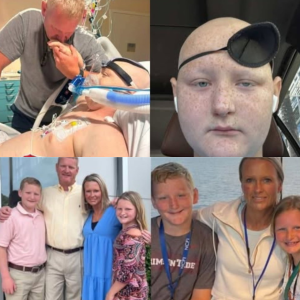
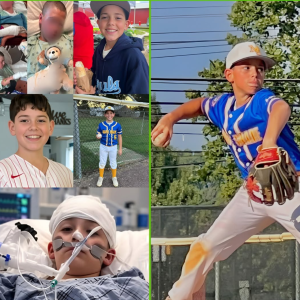
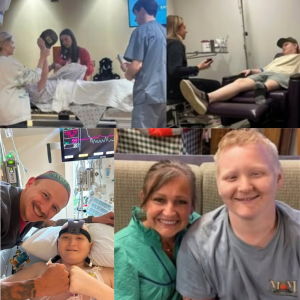
Will couldn’t know how much time he had left—but he knew he wasn’t ready to stop fighting. When a fifteen-year-old child looks into the dark, lens-capped eye of a smartphone camera and decides to lay his entire soul bare to a world of strangers, it is rarely an act of performance; it is an act of pure, unfiltered survival. That is why the video Will Roberts posted himself in April became such a meaningful part of his story.

Facing the cold, clinical reality of an aggressive cancer that had methodically dismantled every standard treatment option available, Will chose not to vanish quietly into the background of a hospital room. Instead, a fifteen-year-old boy, as his treatment options were running out, told the world himself that he still wanted a chance. He didn’t ask for pity, nor did he hide behind the sanitized euphemisms often used to soften the blow of terminal illness. He spoke with the terrifying clarity of someone who understood that every passing second was a luxury being stolen away.
And the world listened. The internet, so often criticized as a landscape of fleeting trends, cynicism, and endless distraction, suddenly transformed into a global sanctuary of empathy. Millions of ordinary people, scrolling through their daily routine feeds, were jolted out of their passive consumption by the sheer vulnerability of Will’s voice. The clip was shared, re-uploaded, tagged, and discussed until it created a digital tidal wave that no institutional red tape could ignore. Those shares helped connect the family with DeltaRex-G in California, a targeted gene therapy that offered a fragile, golden thread of possibility where conventional oncology had offered only a dead end. For a brief, breathtaking moment, it felt as though humanity had unlocked a new superpower: the ability to bypass bureaucratic barriers and deliver cutting-edge science directly to those who needed it most, powered entirely by collective compassion.
Will passed away on July 23, wrapped in the quiet love of his parents after a fight that tested every limit of his young body and spirit. To a casual observer, his passing might seem like the tragic, predictable end to a high-stakes medical drama—a heartbreaking reminder that biology ultimately dictates the boundaries of human life, regardless of how brightly the flames of viral support might burn. But perhaps the meaning of that video should not end on the day he left this world. In fact, viewing his story as merely a sad tale with a definitive ending misses the entire point of what happened during those turbulent months between April and July. Will asked the world to give him one more chance, but what that plea truly brought was only revealed afterward, lingering in the quiet spaces left behind in the hearts of millions who watched his journey unfold.

When we examine what happened next, we are forced to step past the surface-level emotion of a viral story and confront the complex, uncomfortable realities of modern healthcare in the digital age. Will’s desperate plea opened a portal into a high-stakes world where personal determination, cutting-edge genetics, and the unpredictable nature of experimental medicine intersect. The connection to DeltaRex-G in California was not just a medical referral; it was an extraordinary leap of faith. DeltaRex-G represents a paradigm shift in gene therapy—a novel approach engineered to target specific genetic signals within tumors while minimizing the brutal, systemic devastation caused by traditional chemotherapy. But for a patient whose body was already heavily fatigued by months of intense treatment, stepping into the realm of advanced targeted therapy meant navigating an unprecedented psychological and physical frontier.
The journey to California was filled with immense logistical hurdles, frantic clinical evaluations, and the relentless ticking of an unforgiving clock. Yet, what captured the global imagination was the profound contrast between the clinical complexity of a experimental laboratory and the simple, human desire of a teenage boy who wanted to live to see his next birthday. Every update posted along the way was dissected by hundreds of thousands of followers who had invested their prayers, their finances, and their hopes into his survival. In those tense weeks, Will became more than just a patient; he became a living symbol of humanity’s collective resistance against incurable disease. Every small victory, every minor improvement in his vitals was celebrated as a shared triumph, while every setback sent a tremor through a community that spans across oceans and time zones.
However, beneath the overwhelming wave of public solidarity lies a critical, burning debate that continues to shake the foundation of modern medical ethics. Will’s ability to secure access to an experimental treatment through viral advocacy raised a deeply troubling question: What happens to those who fight the exact same battles in total silence? For every Will Roberts whose video captures the hearts of millions, there are thousands of children in sterile hospital rooms whose desperate pleas never cross an algorithm’s threshold. They remain invisible, confined to standard palliative care simply because their stories were never told with the right lighting, the right wording, or the arbitrary favor of a social media recommendation engine. Is it fair, ethical, or sustainable for access to potentially life-extending medical breakthroughs to depend on a patient’s ability to go viral?
This dilemma exposes the profound structural flaws within our global healthcare framework, where the gap between experimental innovation and patient access remains vast and perilously difficult to cross. Conventional clinical trials are designed to be slow, methodical, and meticulously controlled to ensure absolute scientific validity and safety. They operate on a timeline of years, requiring endless documentation, regulatory sign-offs, and rigid selection criteria. But terminal patients do not have years; they do not even have months. When a young person like Will uses the power of public opinion to demand a right to try, it forces the medical establishment to confront its own rigidity. It poses a challenge to researchers, pharmaceutical executives, and regulatory agencies: How can we build a system that moves with the same urgency as a dying child’s heart, without sacrificing the safety and scientific integrity required to cure disease?

Furthermore, Will’s journey highlights the psychological burden placed on modern patients who are forced to become their own publicists in order to save their own lives. No fifteen-year-old child should ever have to shoulder the weight of managing a global media campaign while simultaneously enduring the excruciating physical toll of advanced cancer. The energy required to speak into a camera, to ask strangers for financial support, and to keep millions of followers updated is energy that should be spent resting, reflecting, and being present with family. Will bore that burden with incredible grace, but his courage should not obscure the harsh reality that he was forced into a position no child should ever occupy. His video was a triumph of human spirit, but it was also an indictment of a world where hope must be begged for on a public screen.
Despite the tragic loss on July 23, it would be a devastating error to view Will’s fight as a failure or his experimental treatment as a futile effort. The three extra months he won, the invaluable clinical insights gained through his participation in advanced gene therapy, and the global awareness generated by his voice are enduring victories. In the field of oncology, every single data point matters. Every individual who steps forward to try a novel therapeutic pathway helps pave the road for the next generation of treatments. The knowledge gleaned during Will’s treatment with DeltaRex-G adds another piece to the vast puzzle of fighting pediatric osteosarcoma, bringing scientists one step closer to the day when no child has to record a final plea for help.
More importantly, Will left behind a transformed blueprint for patient advocacy. He demonstrated that a patient is not merely a passive recipient of a medical fate written by doctors, but an active participant who has the right to question boundaries, seek alternatives, and demand access to the absolute edge of medical science. His legacy lives on in the parents who read his story and find the courage to fight harder for their own sick children, in the researchers who are reminded of the human faces behind their laboratory samples, and in the digital communities that now realize the immense, life-altering power contained within a simple share button.
When we reflect on the entirety of Will’s journey, we realize that the true meaning of his life cannot be measured by the number of days he was granted, but by the undeniable impact he had on the world in the time he was here. He chose to turn his deepest suffering into a bridge of connection, transforming his personal tragedy into a universal conversation about hope, medicine, and human dignity. The video he posted in April was never just about getting to California; it was about asserting his fundamental right to be heard, to be fought for, and to be remembered.

The video didn’t end when Will left Alabama, and its impact certainly didn’t stop when his heart came to a rest on July 23. The story continues in every research lab where scientists labor late into the night searching for cures, in every legislative chamber where advocate groups lobby for expanded right-to-try laws, and in every home where someone learns that hope is worth fighting for, even against impossible odds. Will Roberts spoke to the world because he was not ready to stop fighting, and by listening, the world proved that his fight was worth every effort. As long as his story continues to spark difficult questions, inspire collective action, and remind us of the precious, fragile nature of life, Will’s voice will never truly be silenced.