The autumn light was already fading into a cool gray dusk when the yellow school bus squeaked to a halt at the corner of Elm Street. Sarah stood at the kitchen window, her fingers wrapped tightly around a warm mug of tea that she wasn’t actually drinking. She watched her twelve-year-old daughter, Charlie, step down from the bus, her backpack slung heavily over one shoulder. Charlie’s posture was steady, but there was an unmistakable stillness about her that had settled in over the last six months—a quiet composure that belonged to someone much older than a seventh grader.
Sarah stepped away from the window and waited in the quiet hall. Every afternoon brought a familiar knot of anxiety to Sarah’s chest. Six months had passed since the sudden, heartbreaking loss of her fifteen-year-old son, Will, and the house still felt as though it were holding its breath. Every room seemed slightly too large, every shadow slightly too long. As a mother, Sarah spent every waking moment trying to monitor the fragile emotional weather inside her remaining child. She searched Charlie’s face daily for signs of hidden heartbreak, waiting for the inevitable storm of grief that she feared was trapped inside the young girl.

The front door clicked open, bringing in a sharp gust of November air along with the familiar scent of damp leaves. Charlie kicked off her sneakers, untangled her headphones, and tossed her jacket onto the wooden peg in the entryway. She looked up at her mother with a small, exhausted smile that didn’t quite reach her dark eyes.
“Hey, Mom,” Charlie said softly, slinging her canvas bag over her arm as she walked into the kitchen.
“Hey, sweetheart,” Sarah replied, reaching out to gently brush a stray lock of hair from Charlie’s forehead. “How was art class today? Did you finish that clay project you were working on?”
Charlie paused, resting her hands on the kitchen island. She looked down at the granite countertop for a long moment, as if carefully choosing her words. When she finally looked up, her expression was unusually serious, carrying a weight that immediately put Sarah on high alert.
“Mom,” Charlie began, her voice barely above a whisper. “I need to ask you something really important. And you have to promise me you’ll say yes.”
Sarah felt her stomach drop, a familiar spike of maternal alarm shooting through her veins. “Of course, Charlie. What is it?”

Charlie took a deep breath, clutching the edge of the counter. “If you talk to the school counselor tomorrow, or if you meet any of the parents at the weekend fundraiser… please don’t tell them Will is gone yet. Please don’t tell them he died.”
The words hung in the warm air of the kitchen like a sudden frost. Sarah froze, her heart sinking into a dark, familiar pit of terror. Her mind immediately raced through every grief counseling book she had spent the last half-year reading, every warning about delayed shock, psychological denial, and traumatic avoidance.
For six months, Charlie had been shockingly composed. She hadn’t thrown tantrums, she hadn’t screamed at the universe, and she hadn’t cried herself to sleep in the way Sarah often did in the privacy of her own bedroom. Sarah had silently marveled at her daughter’s resilience, but in that single, crushing second, Sarah realized her worst nightmare might be coming true. She believed Charlie was breaking down. She believed her twelve-year-old daughter had drifted into a dangerous state of denial, refusing to accept the permanent, brutal reality that her older brother was never coming home again.
“Charlie…” Sarah began, her voice trembling slightly as she tried to choose her words with immense delicacy. She moved closer, setting her tea mug on the counter and reaching out to take Charlie’s small, cool hands in her own. “Sweetheart, we talked about this with Dr. Evans. I know how much it hurts. I know it feels completely impossible some days. But Will isn’t coming back. We can’t pretend that things are…”
“Mom, stop,” Charlie interrupted quietly, gently pulling her hands away. She didn’t look angry, nor did she look delusional. Her eyes were bright, clear, and intensely focused. “I know Will is gone. I know he died six months ago. I know he isn’t in his room, and I know I’m never going to hear his laugh in the hallway again. I haven’t forgotten any of it.”
Sarah blinked, completely thrown off balance by the calm clarity in her daughter’s voice. “Then… why would you ask me not to tell people? Why would you want to hide it?”
Charlie sat down on one of the wooden barstools, folding her arms over her chest. She looked out the kitchen window toward the backyard, where an old, rusted basketball hoop still hung from the side of the garage—a lingering monument to a boy who used to spend hours practicing his jump shot in the fading light.
n
“Because today at school, a new girl transferred into my home room,” Charlie said quietly. “Her name is Maya. She just moved here from out of state, and she doesn’t know anyone in town. She doesn’t know our family history, she doesn’t know our last name, and she doesn’t know what happened in April.”
Sarah listened silently, her heart pounding as she waited for the rest of the story.
“During lunch, Maya sat next to me,” Charlie continued, her voice soft but filled with an odd kind of reverence. “We were talking about music, and she noticed the old silver guitar pick I keep taped to the front of my binder. She pointed at it and asked me if I played. I told her no, but that it belonged to my older brother. And then… she looked at me and asked an innocent question. A question no one in this town has asked me in six months.”
Charlie turned her head to look directly at her mother. “She smiled and said, ‘Oh, you have a brother? What’s he like?'”
Sarah felt a sharp lump form in her throat. For half a year, everyone in their small community had treated their family with a delicate, walking-on-eggshells kind of pity. Teachers spoke to Charlie in hushed, sympathetic tones. Classmates lowered their eyes when she walked down the hall. Friends avoided mentioning brothers, families, or middle school memories altogether, terrified of accidentally tearing open an unhealed wound. Charlie had been transformed, almost overnight, from a normal kid into “the girl whose brother died.”

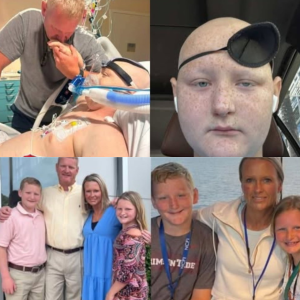
May be an image of one or more people and people smiling
“When she asked me that,” Charlie whispered, a small, sad smile touching the corners of her mouth, “I realized something terrible, Mom. Every single person who meets me now learns about Will’s death before they ever learn about his life.”
Sarah stood perfectly still, the silence in the kitchen growing heavy and deep.
“If I had told Maya right then that Will died six months ago,” Charlie explained, her voice gaining strength, “do you know what would have happened? Her eyes would have opened wide with shock. Her face would have dropped. She would have gasped and said, ‘Oh my gosh, I’m so, so sorry.’ And then a giant wall of awkwardness would have built up between us. She would have stopped asking questions. She would have felt guilty for even bringing it up. She would have spent the rest of lunch tip-toeing around me, treating me like I was made of fragile glass.”
Charlie leaned forward, pressing her palms against her knees. “And worst of all, Mom, Will would have just become a tragedy to her. He would have been ‘the late brother.’ He would have been a sad story, a statistic, a reason to feel bad for me.”
“So… what did you tell her?” Sarah asked, her voice raspy with emotion.
“I didn’t tell her he was gone,” Charlie said simply. “I just answered her question. I told her he was fifteen. I told her he was the loudest human being on the face of the earth, and that he used to burnt toast every single morning because he always got distracted trying to make up new chord progressions on his guitar. I told her how he once tried to build a homemade hovercraft out of a leaf blower and a plastic tarp, and how he accidentally blew out the power in the entire garage.”
A soft, unexpected laugh escaped Sarah’s lips, quickly followed by a tear that slipped down her cheek. She remembered that afternoon vividly—the loud pop of the breaker box, Will standing in the doorway covered in dust, grinning sheepishly with his hair standing on end.
“I told her about how he used to jump out from behind the hallway door to scare me every time I came home from school,” Charlie went on, her eyes sparkling with memories that had been locked away in darkness for far too long. “I told her how he hated mushrooms, how he was terrible at math but could memorize every single line from his favorite movies, and how he always gave the absolute worst advice whenever I was stressed about my friends. We sat there for forty-five minutes, Mom. And Maya was laughing. She was laughing so hard she almost spilled her juice box.”
Charlie swallowed hard, wiping a faint trace of moisture from her eye. “For forty-five minutes, Will wasn’t a memory. He wasn’t a sad photo on a mantlepiece, and he wasn’t a tragedy that made people look away. For forty-five minutes, he was just my big brother. He was real, he was alive in that room, and someone new got to know him for who he actually was.”
Sarah stood frozen, her chest aching with a profound, staggering mix of sorrow and awe. She had spent the last six months consumed by the mechanics of grief—worrying about therapy appointments, managing sympathy meals, staring at the empty chair at the dinner table, and trying to protect her daughter from the cold reality of loss. She had focused so intensely on the void Will left behind that she had forgotten how to celebrate the massive, vibrant space he had occupied while he was here.
In her innocence and brilliant wisdom, a twelve-year-old girl had identified the subtle cruelty of grief: that the world often allows a person’s death to swallow their entire life whole. When someone passes away, society immediately rewrites their biography, reducing decades or years of laughter, flaws, jokes, and love into a single, devastating final chapter.
“I don’t want people to know how Will’s story ended before they know how he lived,” Charlie said, her voice trembling slightly for the first time. “I’m not trying to pretend he’s still here, Mom. I know he’s gone. But when people ask me about him, I want them to fall in love with him first. I want them to laugh at his stupid jokes. I want them to know how brave he was, how silly he was, and how much he made this family smile. I want them to see him as a complete person, not just a tragic headline.”
Charlie looked at her mother with an intensity that pierced Sarah to the very core. “Because if the very first thing people hear about Will is that he died, that’s all they’ll ever remember about him. They’ll feel sorry for him, and they’ll feel sorry for us. But if they learn who he was first… then when they eventually find out he’s gone, they won’t just feel pity. They’ll actually understand what the world lost.”
The kitchen fell completely silent. The soft ticking of the clock on the wall sounded like distant footsteps. Sarah walked slowly around the kitchen island, pulled her daughter into her arms, and held her as tightly as she could. She buried her face in Charlie’s hair, letting her tears fall freely onto her daughter’s shoulder.
They weren’t just tears of sorrow anymore. They were tears of immense relief, of profound gratitude, and of a strange, beautiful kind of hope that Sarah hadn’t felt in six long, dark months. She had been so afraid that Charlie was losing her grip on reality, but in truth, Charlie was the only one holding onto the part of reality that actually mattered.
Will was not just a missing presence in a quiet house. He was the boy who burnt the toast. He was the boy who broke the breaker box with a leaf blower. He was the boy whose guitar pick was taped to a school binder, whose laughter still echoed in the stories his little sister refused to let die.
“Okay, Charlie,” Sarah whispered into her daughter’s hair, her voice choked with emotion. “You’re right. You’re completely right. We won’t let his story start with how it ended.”
They stood there together in the quiet hall as the twilight settled over the neighborhood outside. For the first time since April, the heavy silence in the house didn’t feel like an empty void. It felt like a space waiting to be filled—not with hushed condolences or solemn whispers, but with stories, memories, and the vibrant, unyielding light of a life that refused to be forgotten.
The autumn light was already fading into a cool gray dusk when the yellow school bus squeaked to a halt at the corner of Elm Street. Sarah stood at the kitchen window, her fingers wrapped tightly around a warm mug of tea that she wasn’t actually drinking. She watched her twelve-year-old daughter, Charlie, step down from the bus, her backpack slung heavily over one shoulder. Charlie’s posture was steady, but there was an unmistakable stillness about her that had settled in over the last six months—a quiet composure that belonged to someone much older than a seventh grader.
Sarah stepped away from the window and waited in the quiet hall. Every afternoon brought a familiar knot of anxiety to Sarah’s chest. Six months had passed since the sudden, heartbreaking loss of her fifteen-year-old son, Will, and the house still felt as though it were holding its breath. Every room seemed slightly too large, every shadow slightly too long. As a mother, Sarah spent every waking moment trying to monitor the fragile emotional weather inside her remaining child. She searched Charlie’s face daily for signs of hidden heartbreak, waiting for the inevitable storm of grief that she feared was trapped inside the young girl.
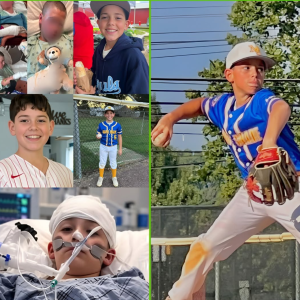
Có thể là hình ảnh về một hoặc nhiều người, mọi người đang cười, bệnh viện và văn bản
The front door clicked open, bringing in a sharp gust of November air along with the familiar scent of damp leaves. Charlie kicked off her sneakers, untangled her headphones, and tossed her jacket onto the wooden peg in the entryway. She looked up at her mother with a small, exhausted smile that didn’t quite reach her dark eyes.
“Hey, Mom,” Charlie said softly, slinging her canvas bag over her arm as she walked into the kitchen.
“Hey, sweetheart,” Sarah replied, reaching out to gently brush a stray lock of hair from Charlie’s forehead. “How was art class today? Did you finish that clay project you were working on?”
Charlie paused, resting her hands on the kitchen island. She looked down at the granite countertop for a long moment, as if carefully choosing her words. When she finally looked up, her expression was unusually serious, carrying a weight that immediately put Sarah on high alert.
“Mom,” Charlie began, her voice barely above a whisper. “I need to ask you something really important. And you have to promise me you’ll say yes.”
Sarah felt her stomach drop, a familiar spike of maternal alarm shooting through her veins. “Of course, Charlie. What is it?”
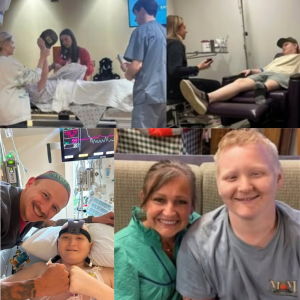
Có thể là hình ảnh về một hoặc nhiều người, mọi người đang cười, bệnh viện và văn bản
Charlie took a deep breath, clutching the edge of the counter. “If you talk to the school counselor tomorrow, or if you meet any of the parents at the weekend fundraiser… please don’t tell them Will is gone yet. Please don’t tell them he died.”
The words hung in the warm air of the kitchen like a sudden frost. Sarah froze, her heart sinking into a dark, familiar pit of terror. Her mind immediately raced through every grief counseling book she had spent the last half-year reading, every warning about delayed shock, psychological denial, and traumatic avoidance.
For six months, Charlie had been shockingly composed. She hadn’t thrown tantrums, she hadn’t screamed at the universe, and she hadn’t cried herself to sleep in the way Sarah often did in the privacy of her own bedroom. Sarah had silently marveled at her daughter’s resilience, but in that single, crushing second, Sarah realized her worst nightmare might be coming true. She believed Charlie was breaking down. She believed her twelve-year-old daughter had drifted into a dangerous state of denial, refusing to accept the permanent, brutal reality that her older brother was never coming home again.
Có thể là hình ảnh về một hoặc nhiều người, mọi người đang cười, bệnh viện và văn bản
“Charlie…” Sarah began, her voice trembling slightly as she tried to choose her words with immense delicacy. She moved closer, setting her tea mug on the counter and reaching out to take Charlie’s small, cool hands in her own. “Sweetheart, we talked about this with Dr. Evans. I know how much it hurts. I know it feels completely impossible some days. But Will isn’t coming back. We can’t pretend that things are…”
“Mom, stop,” Charlie interrupted quietly, gently pulling her hands away. She didn’t look angry, nor did she look delusional. Her eyes were bright, clear, and intensely focused. “I know Will is gone. I know he died six months ago. I know he isn’t in his room, and I know I’m never going to hear his laugh in the hallway again. I haven’t forgotten any of it.”
Sarah blinked, completely thrown off balance by the calm clarity in her daughter’s voice. “Then… why would you ask me not to tell people? Why would you want to hide it?”
Charlie sat down on one of the wooden barstools, folding her arms over her chest. She looked out the kitchen window toward the backyard, where an old, rusted basketball hoop still hung from the side of the garage—a lingering monument to a boy who used to spend hours practicing his jump shot in the fading light.
Có thể là hình ảnh về một hoặc nhiều người, mọi người đang cười, bệnh viện và văn bản
“Because today at school, a new girl transferred into my home room,” Charlie said quietly. “Her name is Maya. She just moved here from out of state, and she doesn’t know anyone in town. She doesn’t know our family history, she doesn’t know our last name, and she doesn’t know what happened in April.”
Sarah listened silently, her heart pounding as she waited for the rest of the story.
“During lunch, Maya sat next to me,” Charlie continued, her voice soft but filled with an odd kind of reverence. “We were talking about music, and she noticed the old silver guitar pick I keep taped to the front of my binder. She pointed at it and asked me if I played. I told her no, but that it belonged to my older brother. And then… she looked at me and asked an innocent question. A question no one in this town has asked me in six months.”
Charlie turned her head to look directly at her mother. “She smiled and said, ‘Oh, you have a brother? What’s he like?'”
Sarah felt a sharp lump form in her throat. For half a year, everyone in their small community had treated their family with a delicate, walking-on-eggshells kind of pity. Teachers spoke to Charlie in hushed, sympathetic tones. Classmates lowered their eyes when she walked down the hall. Friends avoided mentioning brothers, families, or middle school memories altogether, terrified of accidentally tearing open an unhealed wound. Charlie had been transformed, almost overnight, from a normal kid into “the girl whose brother died.”
May be an image of one or more people and people smiling
“When she asked me that,” Charlie whispered, a small, sad smile touching the corners of her mouth, “I realized something terrible, Mom. Every single person who meets me now learns about Will’s death before they ever learn about his life.”
Sarah stood perfectly still, the silence in the kitchen growing heavy and deep.
“If I had told Maya right then that Will died six months ago,” Charlie explained, her voice gaining strength, “do you know what would have happened? Her eyes would have opened wide with shock. Her face would have dropped. She would have gasped and said, ‘Oh my gosh, I’m so, so sorry.’ And then a giant wall of awkwardness would have built up between us. She would have stopped asking questions. She would have felt guilty for even bringing it up. She would have spent the rest of lunch tip-toeing around me, treating me like I was made of fragile glass.”
Charlie leaned forward, pressing her palms against her knees. “And worst of all, Mom, Will would have just become a tragedy to her. He would have been ‘the late brother.’ He would have been a sad story, a statistic, a reason to feel bad for me.”
“So… what did you tell her?” Sarah asked, her voice raspy with emotion.
“I didn’t tell her he was gone,” Charlie said simply. “I just answered her question. I told her he was fifteen. I told her he was the loudest human being on the face of the earth, and that he used to burnt toast every single morning because he always got distracted trying to make up new chord progressions on his guitar. I told her how he once tried to build a homemade hovercraft out of a leaf blower and a plastic tarp, and how he accidentally blew out the power in the entire garage.”
Có thể là hình ảnh về một hoặc nhiều người, mọi người đang cười, bệnh viện và văn bản
A soft, unexpected laugh escaped Sarah’s lips, quickly followed by a tear that slipped down her cheek. She remembered that afternoon vividly—the loud pop of the breaker box, Will standing in the doorway covered in dust, grinning sheepishly with his hair standing on end.
“I told her about how he used to jump out from behind the hallway door to scare me every time I came home from school,” Charlie went on, her eyes sparkling with memories that had been locked away in darkness for far too long. “I told her how he hated mushrooms, how he was terrible at math but could memorize every single line from his favorite movies, and how he always gave the absolute worst advice whenever I was stressed about my friends. We sat there for forty-five minutes, Mom. And Maya was laughing. She was laughing so hard she almost spilled her juice box.”
Charlie swallowed hard, wiping a faint trace of moisture from her eye. “For forty-five minutes, Will wasn’t a memory. He wasn’t a sad photo on a mantlepiece, and he wasn’t a tragedy that made people look away. For forty-five minutes, he was just my big brother. He was real, he was alive in that room, and someone new got to know him for who he actually was.”
Sarah stood frozen, her chest aching with a profound, staggering mix of sorrow and awe. She had spent the last six months consumed by the mechanics of grief—worrying about therapy appointments, managing sympathy meals, staring at the empty chair at the dinner table, and trying to protect her daughter from the cold reality of loss. She had focused so intensely on the void Will left behind that she had forgotten how to celebrate the massive, vibrant space he had occupied while he was here.
In her innocence and brilliant wisdom, a twelve-year-old girl had identified the subtle cruelty of grief: that the world often allows a person’s death to swallow their entire life whole. When someone passes away, society immediately rewrites their biography, reducing decades or years of laughter, flaws, jokes, and love into a single, devastating final chapter.
“I don’t want people to know how Will’s story ended before they know how he lived,” Charlie said, her voice trembling slightly for the first time. “I’m not trying to pretend he’s still here, Mom. I know he’s gone. But when people ask me about him, I want them to fall in love with him first. I want them to laugh at his stupid jokes. I want them to know how brave he was, how silly he was, and how much he made this family smile. I want them to see him as a complete person, not just a tragic headline.”
Charlie looked at her mother with an intensity that pierced Sarah to the very core. “Because if the very first thing people hear about Will is that he died, that’s all they’ll ever remember about him. They’ll feel sorry for him, and they’ll feel sorry for us. But if they learn who he was first… then when they eventually find out he’s gone, they won’t just feel pity. They’ll actually understand what the world lost.”
The kitchen fell completely silent. The soft ticking of the clock on the wall sounded like distant footsteps. Sarah walked slowly around the kitchen island, pulled her daughter into her arms, and held her as tightly as she could. She buried her face in Charlie’s hair, letting her tears fall freely onto her daughter’s shoulder.
They weren’t just tears of sorrow anymore. They were tears of immense relief, of profound gratitude, and of a strange, beautiful kind of hope that Sarah hadn’t felt in six long, dark months. She had been so afraid that Charlie was losing her grip on reality, but in truth, Charlie was the only one holding onto the part of reality that actually mattered.
Will was not just a missing presence in a quiet house. He was the boy who burnt the toast. He was the boy who broke the breaker box with a leaf blower. He was the boy whose guitar pick was taped to a school binder, whose laughter still echoed in the stories his little sister refused to let die.
“Okay, Charlie,” Sarah whispered into her daughter’s hair, her voice choked with emotion. “You’re right. You’re completely right. We won’t let his story start with how it ended.”
They stood there together in the quiet hall as the twilight settled over the neighborhood outside. For the first time since April, the heavy silence in the house didn’t feel like an empty void. It felt like a space waiting to be filled—not with hushed condolences or solemn whispers, but with stories, memories, and the vibrant, unyielding light of a life that refused to be forgotten.