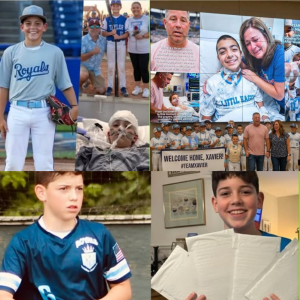
For weeks, Brittney and Jason were surrounded by the same question people often ask grieving parents with the best intentions but no easy answer:
What happens now?
There was no simple response.
Because when a child dies, “moving forward” does not mean what most people think it means.
The calendar keeps changing.
Messages become less frequent.
People return to work.
Cars continue passing outside the house.
Dinner still has to be made.
Laundry still needs folding.
Bills still arrive.

But inside a grieving family, time can feel strangely frozen around one missing person.
For Brittney and Jason, Will was everywhere and nowhere at the same time.
His belongings were still there.
His photographs were still there.
Memories of his voice could appear without warning.
There were rooms that felt different because he was no longer walking into them.
There were ordinary objects that suddenly carried unbearable weight simply because Will had once touched them.
And there was one question Brittney reportedly kept returning to:
What were they supposed to do with all the love they still had for their son?
You cannot simply turn that love off.
You cannot pack it into a box.
You cannot convince a parent’s heart that because a child is gone, the instinct to care for them should disappear too.
That love has to go somewhere.
And slowly, painfully, Brittney and Jason began considering whether the answer might be found in other people who were still fighting battles of their own.
The idea eventually took the form of something they would call “Goodwill.”
On the surface, it sounds like a charity project.
A fund created in Will’s memory.
A way of helping children facing serious illnesses and elderly people who are living through difficult seasons without family or companionship beside them.
But if that were the entire story, it would be moving without being unusual.
Thousands of families have created scholarships, foundations, memorial funds, and community projects after losing someone they love.
What makes the idea behind “Goodwill” so emotionally complicated is the question of why Brittney and Jason were drawn specifically toward these two groups.
Children who are sick.
And elderly people who are alone.
At first, the connection does not seem obvious.
One group is at the beginning of life.
The other is much closer to its final chapters.
One group should be thinking about school, friends, games, birthdays, and what they want to become when they grow up.
The other may already have lived through decades of marriages, careers, children, grandchildren, celebrations, losses, and memories.
Yet there is one experience that can quietly connect both groups.
Loneliness.
Not the loneliness of simply having nobody in the room.
The deeper kind.
The loneliness of feeling as though the rest of the world is moving normally while your own world has suddenly become very small.
Will understood part of that feeling.

Illness can change childhood almost overnight.
One day there are practices, school mornings, family plans, friends calling, and ordinary complaints about homework.
Then suddenly there are appointments.
Hospital bracelets.
Blood tests.
Scans.
Doctors entering rooms with expressions parents learn to read before anyone says a word.
Plans begin revolving around treatments.
Trips are no longer vacations.
Numbers on medical reports start determining whether a family celebrates or holds its breath.
And a child who should be worried about completely ordinary things becomes familiar with words no child should ever need to understand.
But even inside that world, something remarkable can happen.
Children notice other people.
They see the patient in the next room.
They recognize when another parent is crying.
They notice when somebody always seems to be sitting alone.
They ask questions adults sometimes avoid because adults are too frightened of the answers.
Why doesn’t anyone visit him?
Is she scared?
Does that kid have to stay here too?
Will they be okay?
Children can be facing enormous pain themselves and still somehow find room to wonder about someone else.
That is one of the ideas at the emotional center of the “Goodwill” story.
Because Brittney’s memory of Will is not only about what happened to him.
It is also about what he noticed while it was happening.

And apparently, some of those observations stayed with her long after the conversations themselves ended.
There were times during Will’s battle when the family saw other children walking the same frightening road.
Some had parents beside them almost constantly.
Others had families struggling to balance hospital care with jobs, bills, siblings, and responsibilities waiting back home.
Some children received packages and visitors.
Others seemed to have fewer people coming through the door.
Nobody needed to explain to Will what that difference looked like.
He could see it.
But according to the story Brittney would later carry with her, Will also began thinking about people outside children’s hospitals.
People who might be facing something very different but experiencing the same silence.
Elderly people.
Especially those living alone.
That detail stayed with Brittney because it seemed unusual for someone so young.
What makes a teenager fighting for his own future think about an elderly stranger sitting alone in a quiet house?
Perhaps the answer is simpler than people assume.
Pain can make someone focus inward.
But sometimes it does the opposite.
Sometimes it makes them notice pain everywhere.

Maybe Will understood that there are people who go entire days without anybody asking how they are doing.
Maybe he understood that being surrounded by doctors is not the same as feeling accompanied.
Maybe he realized that there are elderly people who have lost spouses, friends, siblings, or even children of their own and now face entire evenings with nobody sitting across from them.
Different circumstances.
Same human need.
To know someone cares.
And that is where the discussion surrounding “Goodwill” becomes bigger than one family.
Because the project raises a question many of us would rather avoid:
How many people around us are suffering quietly simply because nobody notices them?
When most people hear the word charity, they think about money.
A donation.
A fundraiser.
A large check.
A target displayed on a website.
But money does not solve every kind of suffering.
You cannot deposit companionship into somebody’s bank account.

You cannot purchase the feeling of being remembered.
You cannot replace the comfort of hearing someone knock on your door simply because they wanted to see you.
Sometimes the most valuable thing you can give another human being is time.
Ten minutes.
An hour.
A conversation.
A handwritten note.
A phone call.
A meal shared rather than simply delivered.
A promise that someone will return next week.
For a child spending weeks in treatment, a small surprise may interrupt one frightening afternoon.
For an elderly person who has not spoken face-to-face with anyone in days, one visitor may transform an entire week.
Those moments rarely become headlines.
But to the person receiving them, they can feel enormous.
And perhaps that is why the name “Goodwill” matters.
It does not have to represent something grand.
It can represent small acts repeated again and again.
A child receiving something that reminds them they are more than a diagnosis.
A parent sitting beside a hospital bed receiving help with an expense they were too embarrassed to mention.
An elderly man receiving groceries and, more importantly, someone staying long enough to hear one of his stories.
A widow receiving a birthday card when she thought nobody remembered.
A family receiving a little breathing room during a week that felt impossible.
None of those acts erase illness.
None of them erase grief.
But they make people feel less alone inside it.
For Brittney and Jason, however, there is another reason this mission carries so much weight.
Helping other people may also become a way of continuing to parent Will.
That may sound strange to anyone who has never lost a child.
But parents do not stop being parents when their son or daughter dies.
The responsibilities disappear.
The relationship does not.
The love does not.
Neither does the instinct to say their child’s name.
For years, parents imagine futures almost without realizing it.
First days of school.
Graduations.
Jobs.
Weddings.
Holidays.
Family dinners.
Birthdays that add up into adulthood.
Grandchildren they might one day hold.
Little pieces of the future become attached to a child from the moment that child enters the world.
When that future is suddenly taken away, the loss is not only the person.
It is everything that was supposed to happen next.
Brittney and Jason cannot give Will those future birthdays.
They cannot watch him grow into the person he would have become.
They cannot see which dreams would have changed and which ones he would have pursued.
But they can decide what his name continues to mean.
That is a different kind of future.
And perhaps it is the only one grief has left them to build.
Imagine a child ten years from now receiving help through something created because Will lived.
That child may never have heard Will’s voice.
They may never have seen him smile.
They may know only his name and a short version of his story.
Yet something in their life becomes slightly easier because of him.
Then imagine an elderly woman sitting alone one afternoon.
Someone arrives because volunteers connected to Will’s legacy decided nobody in their community should feel forgotten.
She does not know Will.
Will never knew her.
Yet somehow their lives become connected.
That is what legacy can do.
It allows one life to continue touching people far beyond the boundaries of time.
And still, there is something important that should not be romanticized.
Turning grief into service does not mean grief disappears.
Brittney and Jason can help a thousand people and still miss their son every single day.
They can watch “Goodwill” grow and still wish they had never needed to create it.
They can smile while delivering help to another family and cry when they return home.
Both things can be true.
Hope and heartbreak can occupy the same room.
That contradiction is part of what makes this kind of journey so difficult.
People sometimes tell grieving families that their loved one “would want them to be happy.”
Maybe.
But grief is not a switch people can turn off because they have been given permission to smile.
Sometimes a better question is not, “How do you become happy again?”
It is, “How do you carry the loss without allowing it to consume everything that remains?”
For Brittney and Jason, “Goodwill” may become part of that answer.
Not an escape from Will.
A way of carrying him.
Every time his name is mentioned.
Every time someone receives help.
Every time another parent realizes that somebody understands how lonely the hospital journey can feel.
Every time an elderly person is reminded that they are still seen.
Will becomes present in a different way.
And then there is the conversation.
The one Brittney reportedly could not stop thinking about.
It was not some elaborate speech prepared for his parents.
It was not a dramatic statement delivered for an audience.
That is what makes it feel more powerful.
It was simply Will expressing a thought during a period when his own family was already carrying more than seemed possible.
The words have since taken on a much greater meaning.
Because Will’s concern was not only about what was happening to him.
He was thinking beyond himself.
And when Brittney later returned to those words, they began to sound less like a passing observation and more like something her family could build upon.
The imagined heart of that message is simple:
“If we know what it feels like to be scared and alone, then we should make sure somebody else doesn’t have to feel that way by themselves.”
That sentence is not important because it sounds poetic.
It is important because of what it asks.
It asks suffering to create empathy instead of bitterness.
It asks people who have experienced pain to recognize that pain in others.
It asks a family who lost almost everything they wanted to protect to still find something they can give away.
And that is extraordinarily difficult.
When Brittney revisited the thought behind Will’s words, she reportedly understood something differently.
Perhaps the question was never going to be, “How do we get our old life back?”
They could not.
The old life included Will physically being there.
No project could restore that.
No amount of money could change what happened.
No act of kindness could rewrite the ending they desperately wanted.
But they could ask another question:
“What can Will’s life still do?”
That question creates possibilities.
It can help a child.
It can support a family.
It can remind an elderly person they have not been forgotten.
It can inspire somebody who reads Will’s story to visit their grandfather, call their mother, volunteer at a hospital, help a struggling family, or simply pay closer attention to the people around them.
One life can produce thousands of small decisions.
Thousands of small decisions can become something much larger than any individual fundraiser.
That may ultimately be the most important meaning behind “Goodwill.”
Not how much money the fund raises.
Not how many people share a post.
Not how many headlines Will’s story generates.
But whether someone who hears his name chooses to become slightly more compassionate afterward.
Because someday all of us will need someone to notice.
Maybe we will be the parent sitting beside a hospital bed.
Maybe we will be the patient.
Maybe we will become the elderly person whose house grew quieter as the years passed.
Maybe we will simply experience one terrible season when we discover how quickly life can change.
When that moment comes, we will not care whether the person helping us is famous.
We will care that they showed up.
That may be what Brittney and Jason are trying to build.
A reason for people to show up.
For sick children.
For exhausted families.
For lonely elderly people.
For strangers whose names Will never knew.
And through them, perhaps Will keeps showing up too.
Not as a memory trapped inside photographs.
Not only as the boy his family lost.
But as the reason someone received help on a day they thought nobody understood.
There is something profoundly bittersweet about that idea.
Brittney and Jason would give anything to have Will back instead.
That truth should never be forgotten.
“Goodwill” exists not because losing him became acceptable, but because it never will.
It is what happens when two parents are left with an impossible amount of love and decide not to let that love end at the door of an empty bedroom.
They carry it outside.
They give some of it to another child.
Then another family.
Then an elderly stranger.
Then somebody else.
And slowly, the love continues moving.
Maybe that is the most powerful answer to the question Brittney and Jason were left asking after Will died.
What do you do with all the love that has nowhere to go?
You find someone who needs it.
And perhaps that is why the words connected to Will’s final days still affect his parents so deeply.
Because beneath all the pain, they left Brittney and Jason with one idea they could still act upon:
Do not let what we learned through suffering disappear when the suffering ends. Use it to notice somebody else.
Jason reportedly had little to say when Brittney returned to that memory.
Sometimes there are no words big enough for a parent.
Sometimes lowering your head in silence says more.
Because they both understood the painful truth behind the idea.
Will would never get the chance to meet most of the people his story might help.
But those people may know his name.
And one day, if “Goodwill” becomes everything Brittney and Jason hope it can become, there could be children leaving hospitals with lighter hearts, elderly people going to sleep knowing somebody remembered them, and struggling families receiving help at exactly the moment they thought they had run out of options.
All because a grieving mother and father refused to let the story end where the heartbreak began.
Will’s life was far too short.
But perhaps the reach of that life does not have to be.
And the full meaning behind the words that inspired Brittney and Jason to make this decision explains why “Goodwill” is not simply a memorial fund.
For them, it may be one more way of saying:
Will is still here whenever somebody chooses kindness because of him.