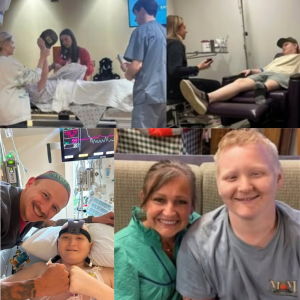
e are some stories that do not truly end when one family’s tragedy is over.
They return in another hospital room, another frightened parent, another child facing a diagnosis no family ever wants to hear.
For Brittney, the pain of losing Will has already created a permanent line between the life she knew before cancer and the life she has been forced to live afterward.
She understands what it means to watch a child fight.
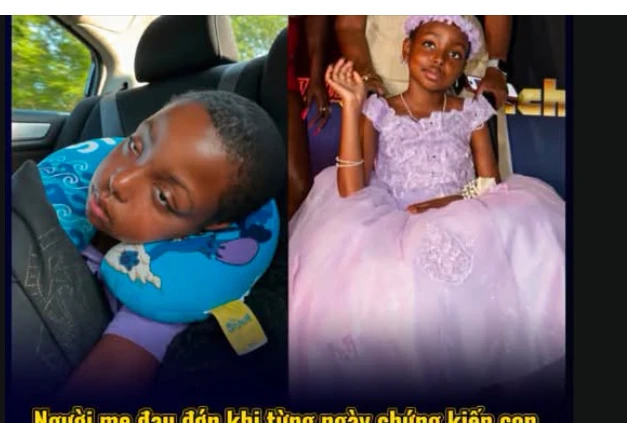
She understands the helplessness of standing beside a hospital bed while doctors search for answers.
And she understands the unbearable reality of loving a child while knowing that love alone cannot stop a devastating disease.
Now, another mother is living through a nightmare that carries painfully familiar echoes.
Her name is Sabrena Beard.
And beside her is her 8-year-old daughter, whose journey from persistent headaches to Stage 4 diffuse midline glioma has become a heartbreaking reminder of how quickly childhood can be transformed by serious illness.
It Started With Headaches
At first, there were headaches.
They began around the first day of the year.
For many families, headaches in children can seem like something temporary — exhaustion, dehydration, stress, or simply a bad day.
But when symptoms continue, a parent’s instinct can begin to sound an alarm that is difficult to ignore.
For Sabrena and her daughter, those headaches eventually became the beginning of something far more serious.
The 8-year-old was diagnosed with Stage 4 diffuse midline glioma, an aggressive brain tumor that placed the family on a path filled with hospitals, treatments, uncertainty and fear.
Suddenly, ordinary childhood routines were replaced by medical appointments.
Instead of thinking about school, games and everyday plans, the family was confronted with decisions about surgery and treatment.
The world around them had changed.
And like so many parents facing childhood cancer, Sabrena had no choice but to enter that new reality alongside her daughter.
The Fight at St. Jude

The little girl underwent brain surgery and continued treatment at St. Jude Children’s Research Hospital.
For months, her life became defined by the rhythm of treatment.
There were difficult days.
There was uncertainty.
But there was also hope.
Hope often becomes one of the most powerful forces for families facing childhood cancer.
It lives in good test results.
It appears when a child has enough strength to smile.
It grows whenever doctors offer another treatment option.
And sometimes, it becomes concentrated into a single symbolic moment.
For Sabrena’s daughter, that moment came in April.
She rang the bell.
For families who have endured long treatment journeys, ringing the bell can represent far more than finishing a medical procedure or completing a stage of treatment.
It can symbolize survival.
It can symbolize endurance.
It can feel like a doorway back toward ordinary life.
For a moment, that sound may have represented everything Sabrena wanted to believe.
Her daughter had fought.
Her daughter was still there.
Perhaps the nightmare was finally loosening its grip.
Perhaps their family could begin looking forward again.
Then July Changed Everything
But cancer does not always follow the ending families desperately hope for.
By July, the news had changed.

The cancer had returned and spread.
For a parent, there may be few experiences more devastating than receiving that kind of update after months of fighting.
Every appointment, every painful treatment and every hopeful milestone suddenly carries a different meaning.
The future becomes uncertain again.
The bell that once represented victory becomes part of a memory from a time when the family still believed there might be more options ahead.
For Sabrena, the focus of motherhood began to shift.
The fight was no longer simply about treatment.
It became about time.
Time beside her daughter.
Time holding her.
Time making sure she felt safe.
Time ensuring that whatever came next, she would not face it alone.
From Treatment to Hospice Care
Sabrena’s daughter has now transitioned to hospice care.
Hospice represents a profound change for families confronting life-limiting illness.
The focus becomes comfort.
Pain management.
Peace.
Dignity.
And above everything else, presence.
For Sabrena, that has meant stepping away from work and placing her attention where she believes it matters most — beside her child.
There are moments in life when schedules, careers and ordinary responsibilities suddenly lose their importance.
For a mother facing the possibility of losing her daughter, time becomes something entirely different.
Every hour matters.
Every conversation matters.

Every hug matters.
Every quiet moment beside a hospital bed matters.
She cannot control what the disease has done.
But she can control one thing.
Her daughter will not have to face these moments without her mother nearby.
Two Mothers Connected by an Unthinkable Experience
This is where Sabrena’s story becomes painfully connected to Brittney’s.
Brittney already knows what it means to lose Will.
She knows the emotional landscape that exists after tragedy.
She knows the strange reality of continuing to wake up each morning when part of your world is missing.
Sabrena is standing on another side of that same devastating road.
One mother is learning how to continue living after loss.
The other is trying to hold onto every remaining moment before loss may arrive.
Their circumstances are not identical.
No two families experience grief, illness or childhood cancer in exactly the same way.
Yet there is a powerful form of understanding that can exist between parents who have watched their children fight serious disease.
They understand the fear behind medical updates.
They understand how quickly hope can rise and collapse.
They understand the exhaustion of hospital life.
And perhaps most painfully, they understand that parents would trade almost anything if it meant taking the suffering away from their child.
Why Sabrena’s Story Matters
Stories like this are difficult to read.
That is exactly why people sometimes look away.
Childhood cancer forces us to confront something deeply uncomfortable: children can become seriously ill even when families do everything possible to protect them.
Yet sharing these stories can still matter.
For some parents, Sabrena’s experience carries an important reminder about paying attention when something does not feel right.
Persistent or concerning symptoms deserve attention.

Parents often know their children’s normal patterns better than anyone else.
When those patterns change, continuing to seek medical answers can be important.
The purpose is not to create fear around every headache or ordinary childhood illness.
Most headaches do not mean a child has a brain tumor.
But Sabrena’s journey shows why persistent symptoms should not simply be dismissed when a parent remains concerned.
Seeking professional medical evaluation can help families understand what is happening and determine whether further testing is necessary.
The Emotional Weight of Childhood Cancer
There is another part of this story that deserves attention.
Serious childhood illness does not affect only the patient.
It changes an entire family.
Parents may stop working or reduce their hours.
Daily routines disappear.
Financial pressure can increase.
Sleep becomes difficult.
Brothers and sisters may struggle with fear and confusion.
Relationships are tested by exhaustion and grief.
Parents must somehow become caregivers, advocates and emotional anchors while experiencing their own terror at the same time.
Sabrena’s decision to step away from work reflects one of the impossible choices many families face.
There is no perfect handbook for these moments.
Parents simply try to make the next decision with the information, strength and love they have available.
What Can People Do?
When families share stories like Sabrena’s, many people immediately ask the same question:
How can I help?
Sometimes, there is no action capable of changing the medical reality.
But support can still have meaning.
People can offer compassion.
They can respect the family’s privacy while honoring the story they have chosen to share.
They can support organizations caring for seriously ill children.
They can help families facing financial or practical burdens.
They can reach out to parents going through similar experiences and remind them they have not been forgotten.
And when a family specifically asks for prayers, those who share that faith can respond in the way the family has requested.
Sometimes support is not about finding the perfect words.
Sometimes it is simply about refusing to look away.
A Mother’s Plea
At the heart of this story is not a headline.
It is a mother sitting beside her 8-year-old daughter.
It is Sabrena choosing to spend these precious days as close to her child as possible.
It is a little girl who has already endured surgery, treatment, hope, disappointment and more uncertainty than any child should have to experience.
And it is the painful connection to families such as Brittney’s, who already know what childhood cancer can take away.
One mother is living with what happened.
Another is living through what is happening.
Between them exists a bond neither would ever have chosen.
A bond created by fear, love, hospitals, hope and unimaginable pain.
Sabrena’s plea now is simple but powerful.
Remember her daughter.
Share her story.
Hold their family close in your thoughts.
And for those who pray, keep this mother and her little girl in your prayers.
Because sometimes, when medicine has reached its limits and a family is facing its darkest chapter, the most meaningful thing the rest of us can offer is compassion, presence and the knowledge that they are not standing completely alone.