Every afternoon after school, the same bicycle appeared outside Will’s house. The boy riding it never stayed long, never knocked on the door, and never asked anyone to come outside. He simply parked beside the steps and walked quietly onto the porch.
Then he stood there for about 60 seconds.
Whatever he did during that minute was so small that, for weeks, Brittney and Jason barely understood why he kept returning. When the minute was over, the boy would step back down, get on his bike, and ride away without saying a word.
At first, they assumed it was grief.
Will had been his best friend. Losing someone that young can leave children with rituals adults do not always understand, and Brittney believed this might simply be his way of staying connected to a boy he could no longer see.
But the visits did not stop.
Days became weeks, and weeks became months. Rain did not stop him, busy afternoons did not stop him, and neither did the uncomfortable reality that Will would never again open the front door.
One afternoon, Jason finally walked outside.
He did not want the boy to feel obligated to keep returning. He gently told him that the family already knew how much he had loved Will and that he did not have to keep doing whatever this quiet ritual had become.
The boy looked down.
For several seconds, he said nothing.
Then, according to the family’s story, he gave a small smile and whispered four words that changed the meaning of every visit:
“I promised Will I would.”
Jason did not immediately press him for details.

The sentence was enough to reveal that the ritual had not begun after Will died. It had started before, during a private conversation between two boys who apparently understood more about what was coming than the adults around them wanted to imagine.
That realization hurt.
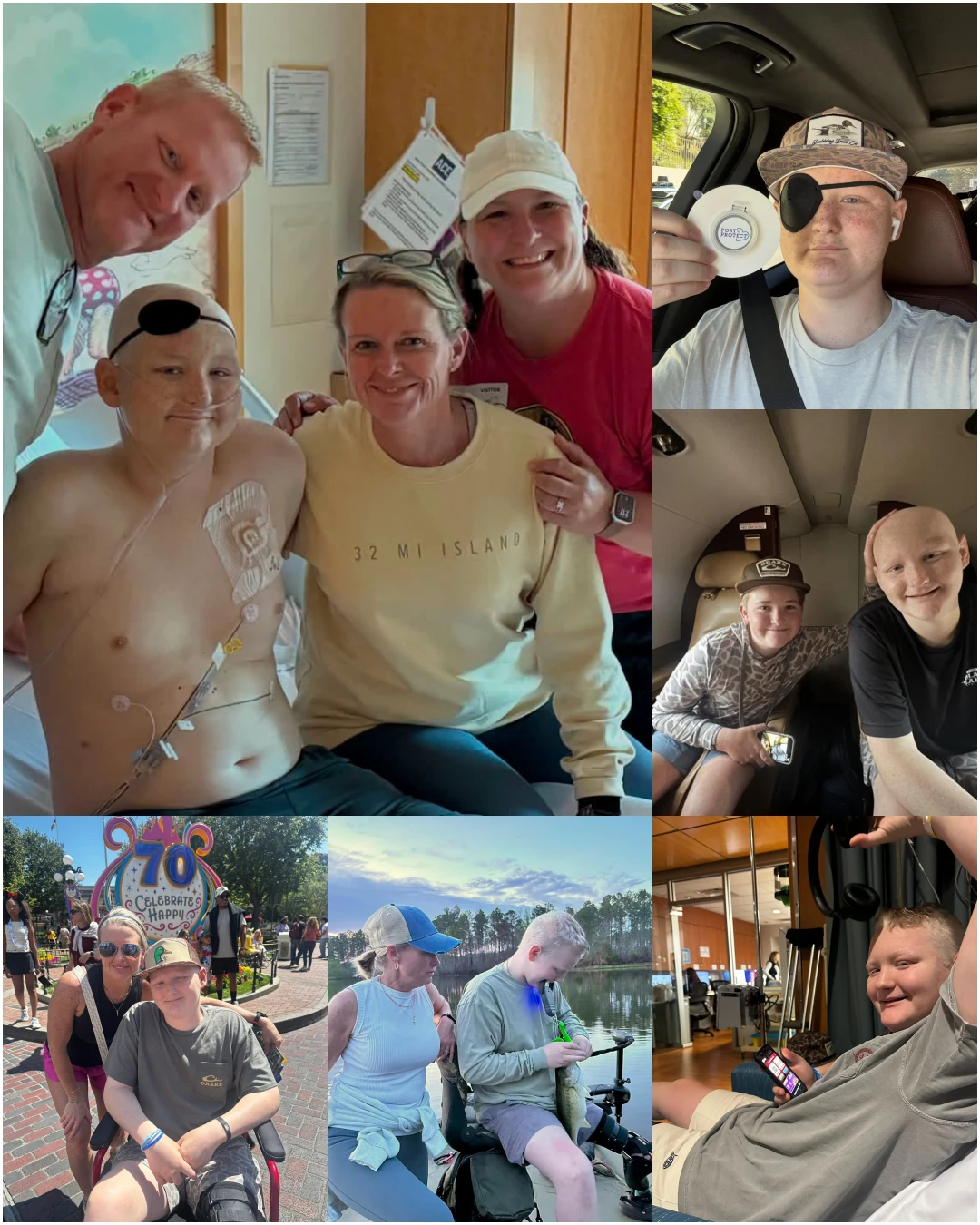
Will had spent so much of his illness surrounded by adults trying to save him. Doctors talked about treatment, family members chased options, and everyone tried to hold onto whatever hope remained.
But somewhere inside all of that, Will had apparently been making plans of his own.
Not plans for himself.
Plans for the people he might have to leave behind.
Brittney initially thought the promise might have been simple. Perhaps Will had asked his friend to check on the house once in a while, wave at his parents, or make sure his family did not forget the friendships that had shaped his life.
Then one afternoon, she finally noticed what happened during those 60 seconds.
And the meaning changed again.
The boy was not coming to relive a memory.
He was carrying out a task.
A tiny one.
The kind of task that would appear almost ridiculous to anyone who did not know the story behind it.
But Will had apparently attached enormous meaning to it.
For a child facing cancer, control can disappear quickly. Adults decide when the next appointment happens, doctors decide what treatment comes next, and the body itself begins making decisions nobody asked it to make.
Will could not control all of that.
But perhaps he could still control one small thing.
He could ask someone he trusted to keep showing up.
That may be why the promise mattered so much.
Children often understand love in concrete ways.
Adults make speeches.
Kids show up.
They carry a bag, save a seat, send the same message every night, or stand on a porch for one minute because somebody they loved asked them to.
Will’s request may have seemed small precisely because it was something his friend could realistically keep doing.
There was no impossible promise.
No demand to take care of an entire family.
Just one simple action repeated every day.
And perhaps that was the genius of it.
Will seemed to understand that grief would change the house.
He knew his parents would eventually come home without him.
He may have known there would be quiet rooms, empty spaces, and moments when the family would feel as though the world had moved on while theirs had stopped.
So he left behind a reminder.

Someone would still come.
Someone would still remember.
Someone would still stand in the place where Will once stood.
That is why the boy never skipped a day.
To him, this was not a symbolic gesture created after the funeral. It was an assignment given directly by his best friend.
And breaking it would have meant breaking his word to Will.
The emotional weight of that promise became clearer once Brittney understood what was happening.
Her son had been dying, yet he had apparently spent part of his remaining time thinking about how his family would feel after he was gone.
That is a difficult thought for any parent to carry.
It suggests that Will knew enough about what was happening to imagine a future without himself in it.
And instead of focusing only on what he would lose, he worried about what his family would lose.
That is the part that reportedly left Brittney in tears.
The porch ritual was no longer simply about a grieving friend.
It became evidence of a conversation she had not been part of.
A private exchange between two children that continued speaking long after one of them was gone.
There is something especially painful about promises made by children.
Adults understand that life interferes.
Children tend to treat a promise as something absolute.
If Will said, “Do this for me,” his best friend apparently heard something far stronger:
Do not forget.
Do not stop.
Do not leave them alone.
And so he kept coming.
The bicycle appeared.
The steps creaked.
The minute passed.
Then the boy disappeared down the road again.
To neighbors, it might have looked meaningless.
To Brittney and Jason, once they understood, it became one of the most painful reminders that Will’s relationships did not end when his life did.
His friend was still keeping his side of the friendship alive.
The ritual also revealed something about grief that families often discover slowly.
Death removes a person, but it does not immediately remove the responsibilities, habits, jokes, promises, and routines built around that person.
Those things linger.
Sometimes they linger in photographs.
Sometimes in a bedroom nobody wants to change.
And sometimes they arrive every afternoon on a bicycle.
Eventually, Brittney understood that the boy was not trying to keep Will alive in some impossible way.
He was trying to keep a promise alive.
That distinction mattered.
Because there was nothing the family could do to change what had happened to Will.
But there was still something profoundly comforting about knowing that, before he died, their son had trusted someone enough to give him one final responsibility.
The mystery of the 60 seconds may have drawn attention.
Không có mô tả ảnh.
But the real story was never the task itself.
It was the reason behind it.
A dying boy apparently wanted to make sure his family would still feel remembered, watched over, and connected after he was gone.
And his best friend decided that promise mattered more than inconvenience, weather, or time.
So every afternoon, he returned.
Not because anybody asked him after the funeral.
Not because the family expected it.
But because Will had.
And for that boy, four words were enough to explain everything:
“I promised Will I would.”